Media Gallery
These media are intended for public distribution. Please credit the Lumina collaboration.
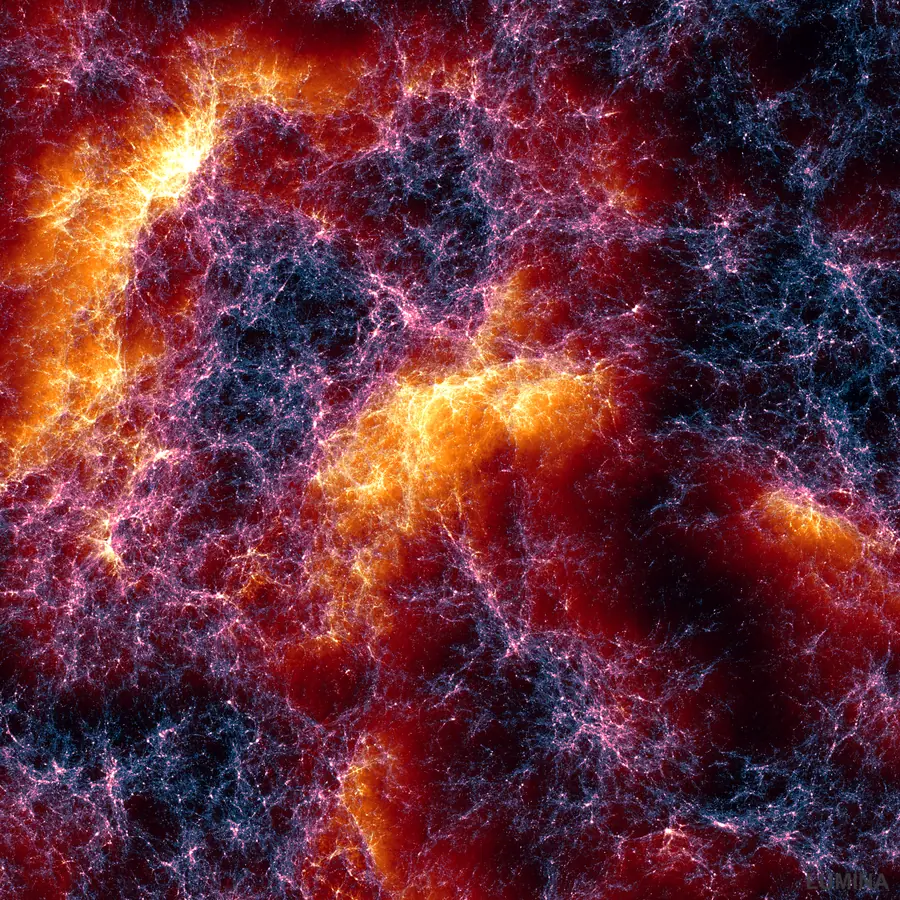
Dark Matter and Gas Velocity — 200 cMpc Region
A 200 cMpc wide region of the Lumina volume at z = 4, combining the dark matter column density with a glow from the mass-weighted gas velocity. The fine filamentary web traces the dark matter, while warm orange and yellow tones highlight where gas is moving fastest, around the most massive nodes of the cosmic web.
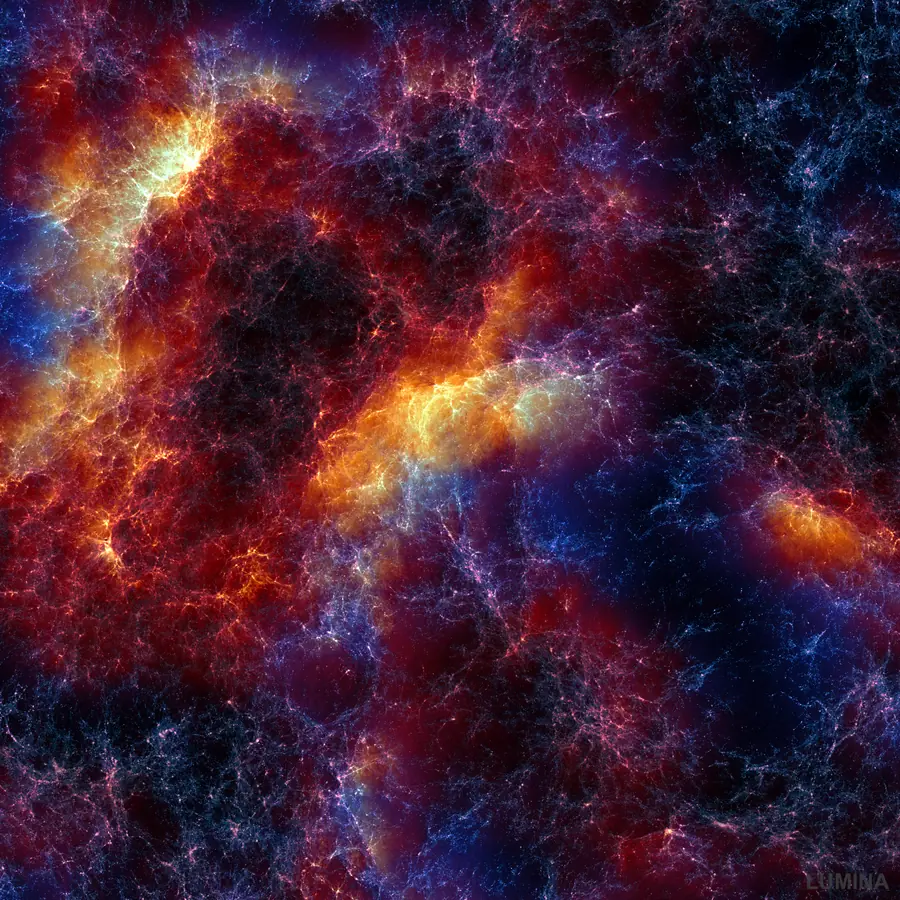
Dark Matter, Gas Velocity, and HeIII — 200 cMpc Region
The same 200 cMpc region at z = 4, now also encoding the HeIII fraction. The gas velocity glow is colored warm where helium is already doubly ionized and cool blue where it is still singly ionized, so the image shows both the flow of gas around massive structures and the patchy progress of helium reionization.
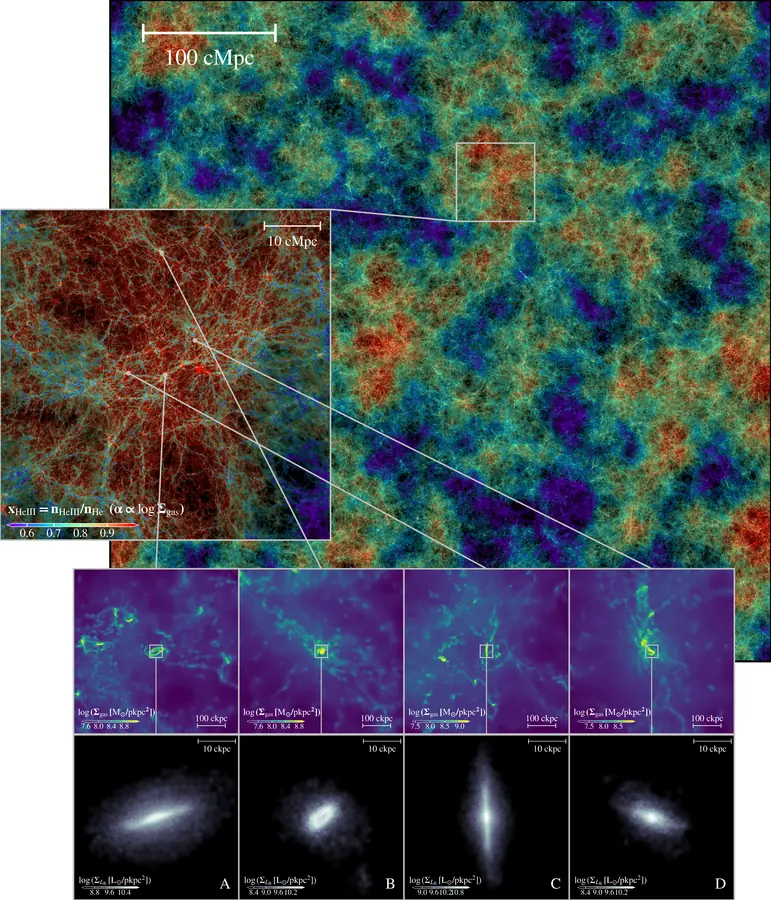
From the Full Box to Individual Galaxies
A multi-scale view of Lumina. The full 500 cMpc volume is colored by the HeIII fraction with the transparency set by the gas surface density, a 10 cMpc inset zooms into a dense region, and further callouts follow four galaxies (A–D) down to their gas surface density on 100 ckpc scales and their stellar light on 10 ckpc scales.
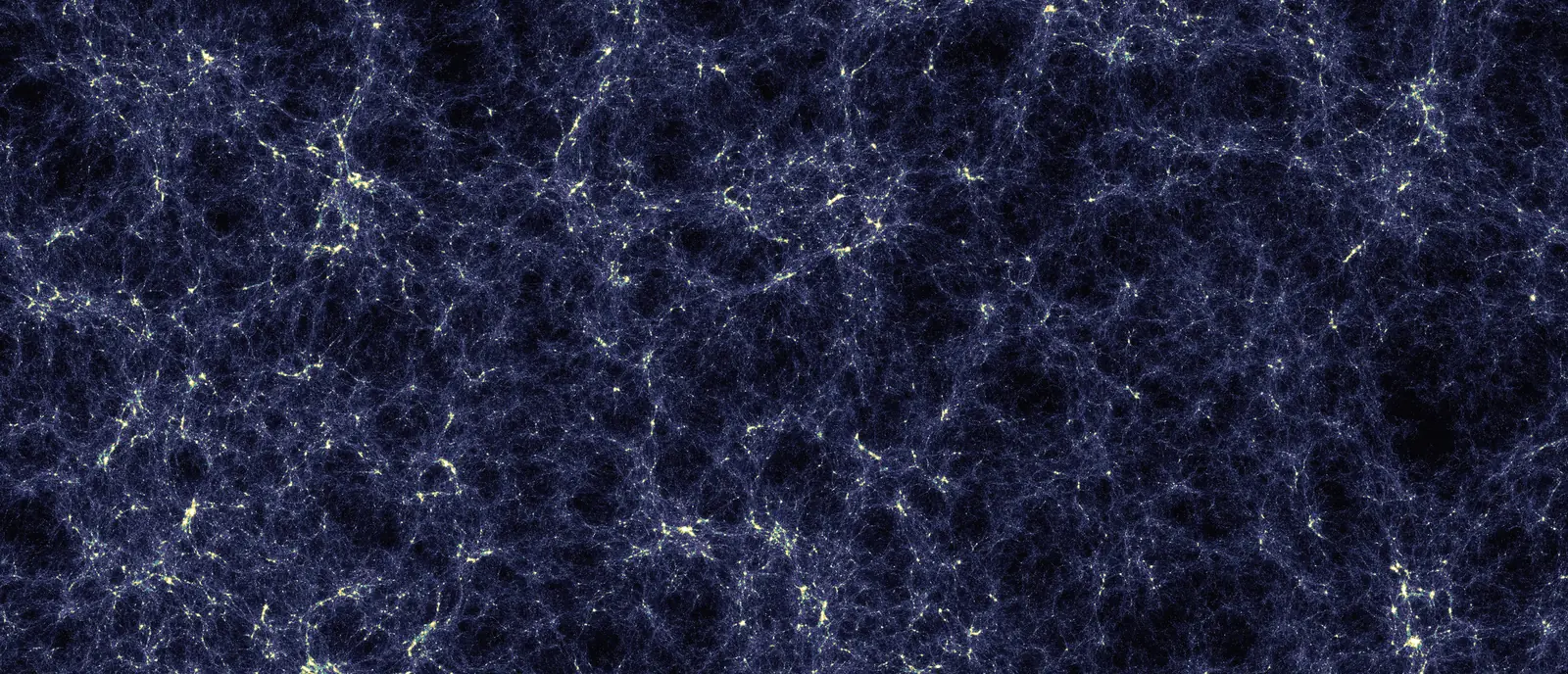
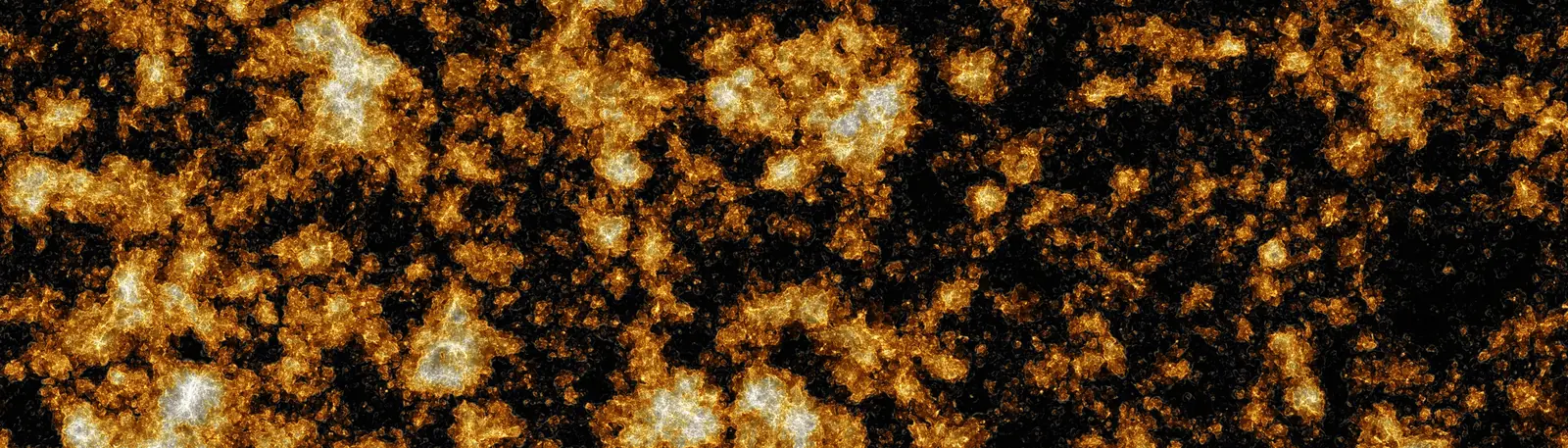
Hydrogen Reionization
A slice showing the HII gas fraction at z = 7. Bright regions are ionized bubbles around galaxies, while dark regions are still neutral.
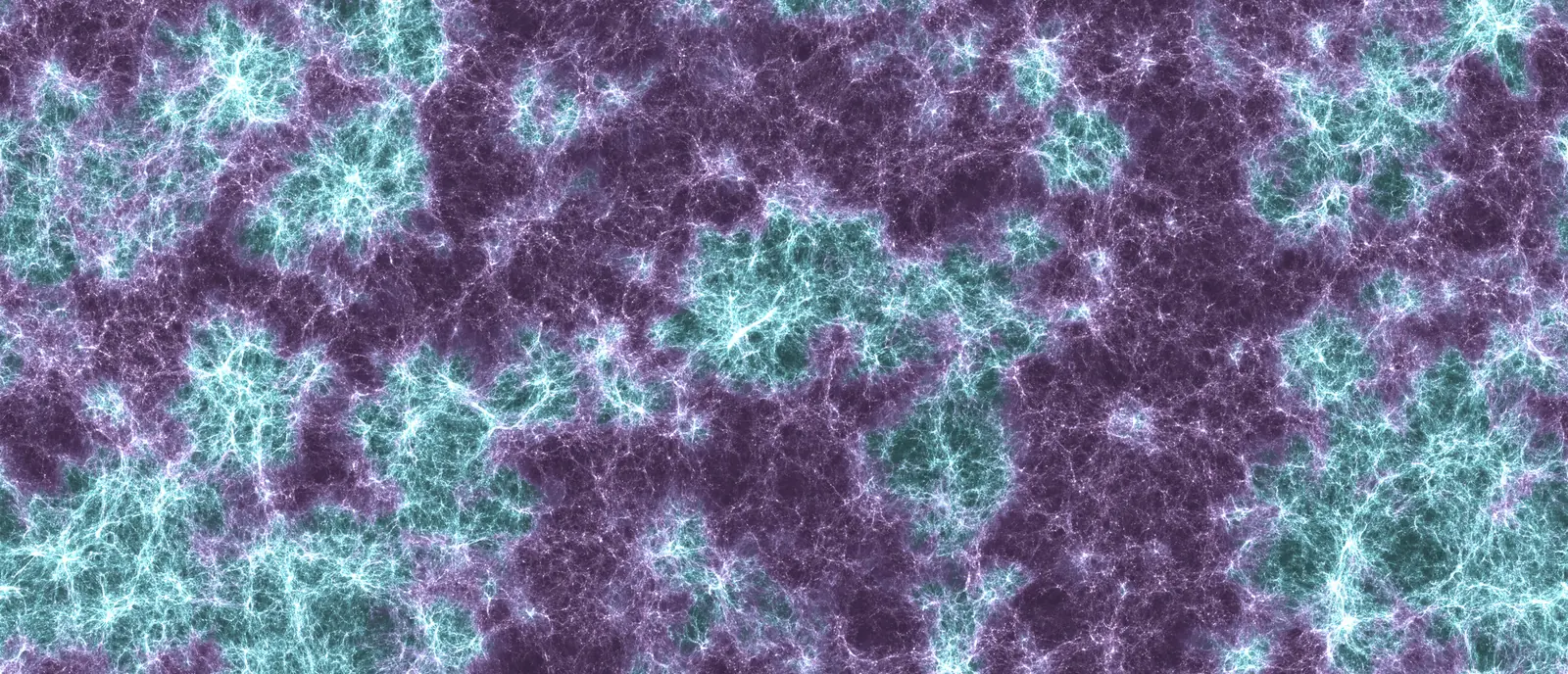
HeII Reionization
A slice showing the HeIII gas fraction at z = 4. Blue regions represent already reionized regions. The ionized and neutral regions are both larger than for hydrogen reionization, due to the more energetic photons and rarer sources responsible for HeII reionization.
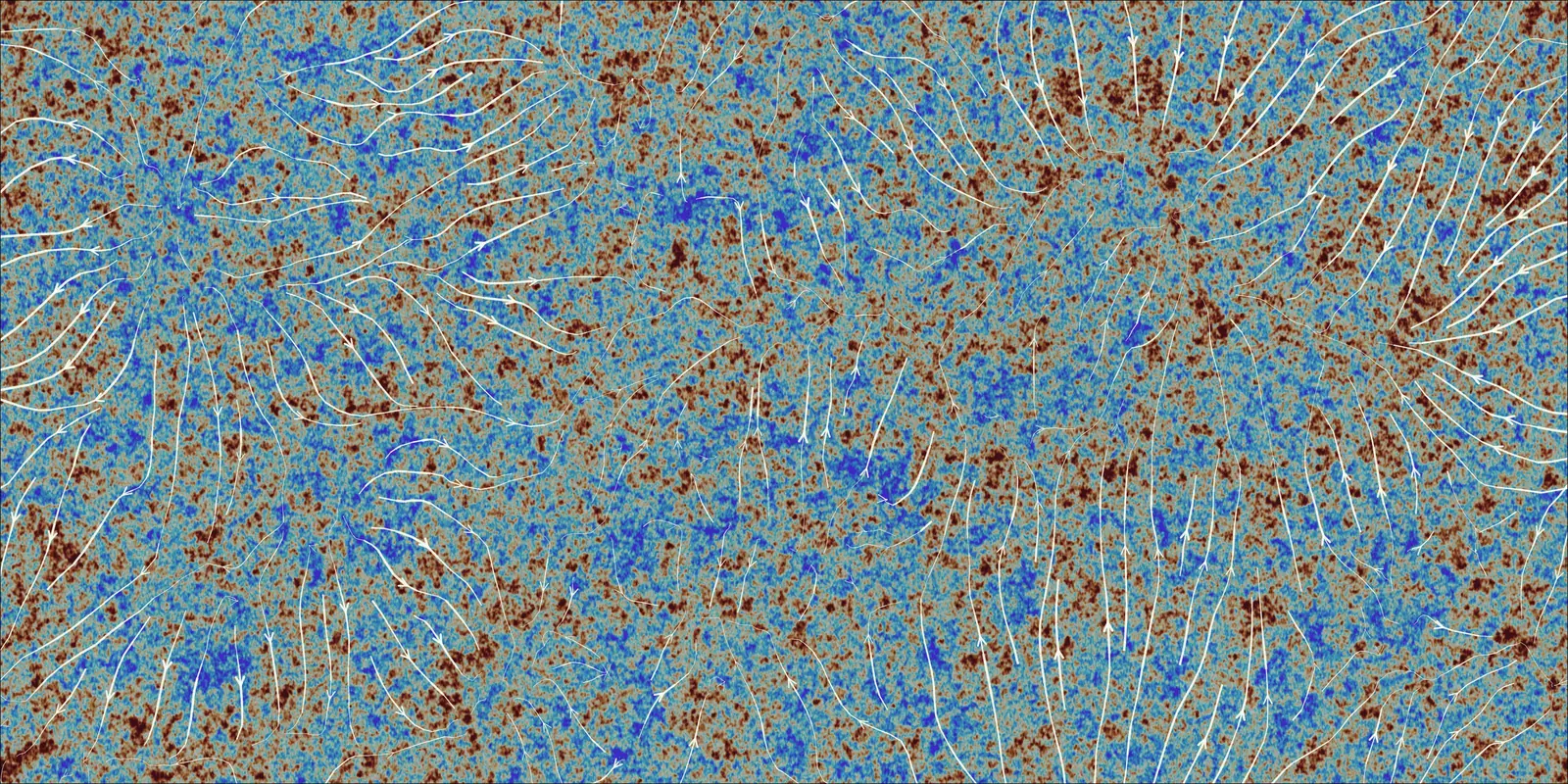
Isocurvature Perturbations and Streaming Velocity
Red regions indicate areas with higher baryon to dark matter fraction while blue regions represent regions with lower fraction at redshift z = 23. These variations are caused by the different initial power spectra used in Lumina. The arrows represent the large-scale relative streaming velocity between both components.